After having rain in the morning (which would give good seeing conditions as the dust would have settled) and a game of golf in the afternoon with sunshine for company. I thought I would finish the day with a viewing session at Nebo Farm. After getting permission from Phil, I arranged to meet Bob from 8 onwards. I had my Meade 8 inch (203 mm for younger persons) LX90 GOTO telescope set up and ready by 20:23, as usual I would be using my 14mm Pentax XW eye piece. We had a strong wind for company but at least there was no clouds in the sky. Temperature was 9 °C but felt a lot lower? Guide stars were Vega and Altair, two of the Summer Triangle, other being Deneb.
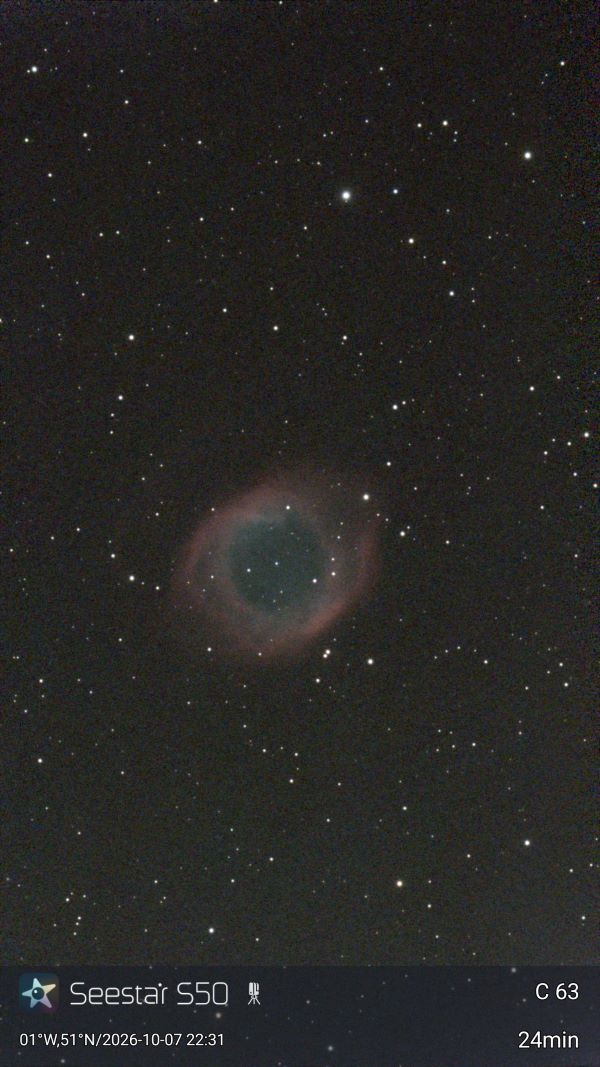
Saturn was the first target, the sixth planet from the sun, this was a bright object in the eye piece but unfortunately with the strong wind, it wobbled about in the eye piece! All I could make out was the moon Titan (second largest in the whole Solar System) out to the east of Saturn. Not far away and to the west of Saturn is Neptune, the eighth planet from the sun, this was just a pale blue dot to look at. By now, Uranus (seventh planet from the sun) had risen effort to be seen, this was just a grey dot to look at. The next planet due up was Mars but not until after midnight (I would be in bed by then!). I thought I would have a look at the constellation of Aquarius, a constellation I do not often look at? First object was Messier (M) 72, this globular cluster (GC) was a large grey blob to view. A bit to the east is M 73, a collection of four stars, a bit of an oddball to me, not even an open cluster? This is a bit better than M 40 in Ursa Major which is only two stars! If you ever did the Messier marathon (trying to find all 110 objects in one night), the last object on your list should be M 30, another GC which looked like a fuzzy blob with a hint of a core. NGC 7293, better known as the Helix nebula or Caldwell (C) 63, is the largest and closest planetary nebula (PN) to us. This target is difficult to see with the eye as it has a lower surface brightness but comes up well in cameras
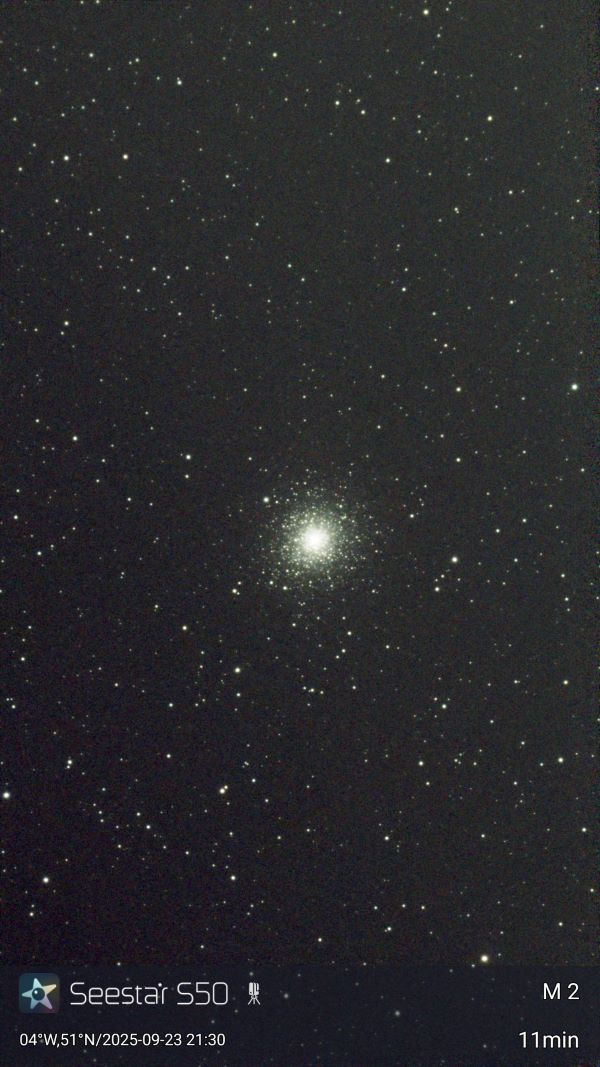
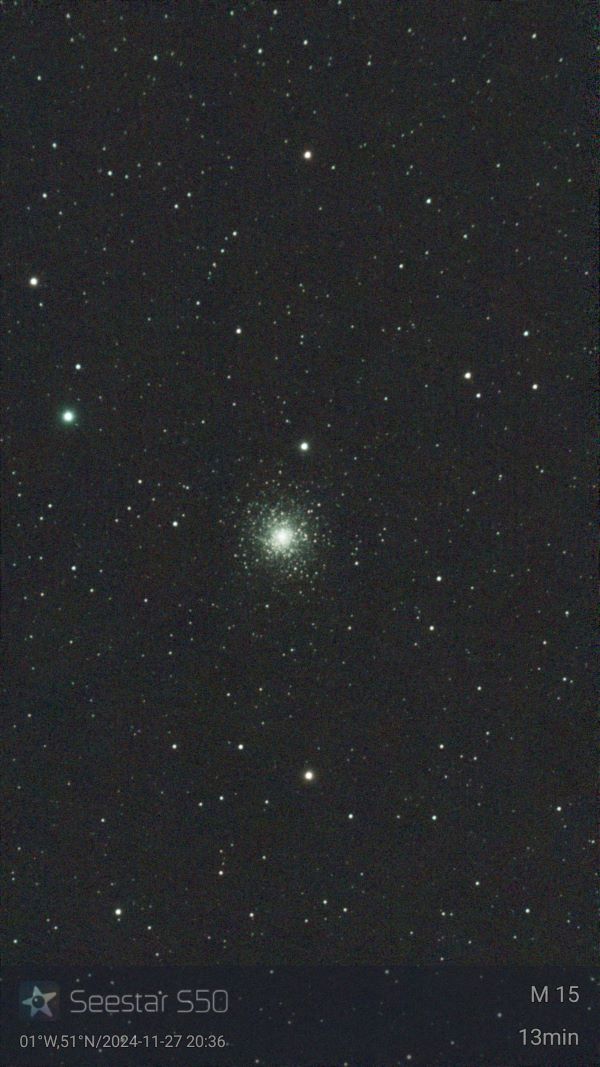
NGC 7009, known as the Saturn nebula or C 55, is another PN but looks like an out of focus star? M 2, is a wonderful large GC to look at, is has a very bright core and I could make out some stars on the edge of this cluster. Going north into Pegasus at the end of the Flying Horse head is M15, this is another large GC but smaller than M 2, it has a brighter core to me and I could make out some stars of the edge of this cluster as well. Final object for the evening was NGC 7331, as known as C 30, this is a spiral galaxy which to me was a faint fuzzy blob to look at.
Time was now 22:31, still no cloud in the sky, at least the wind has dropped a bit. Temperature had dropped to 7 °C.
Image Description
Image Description
Clear skies.
Peter Chappell
AI Website Generator